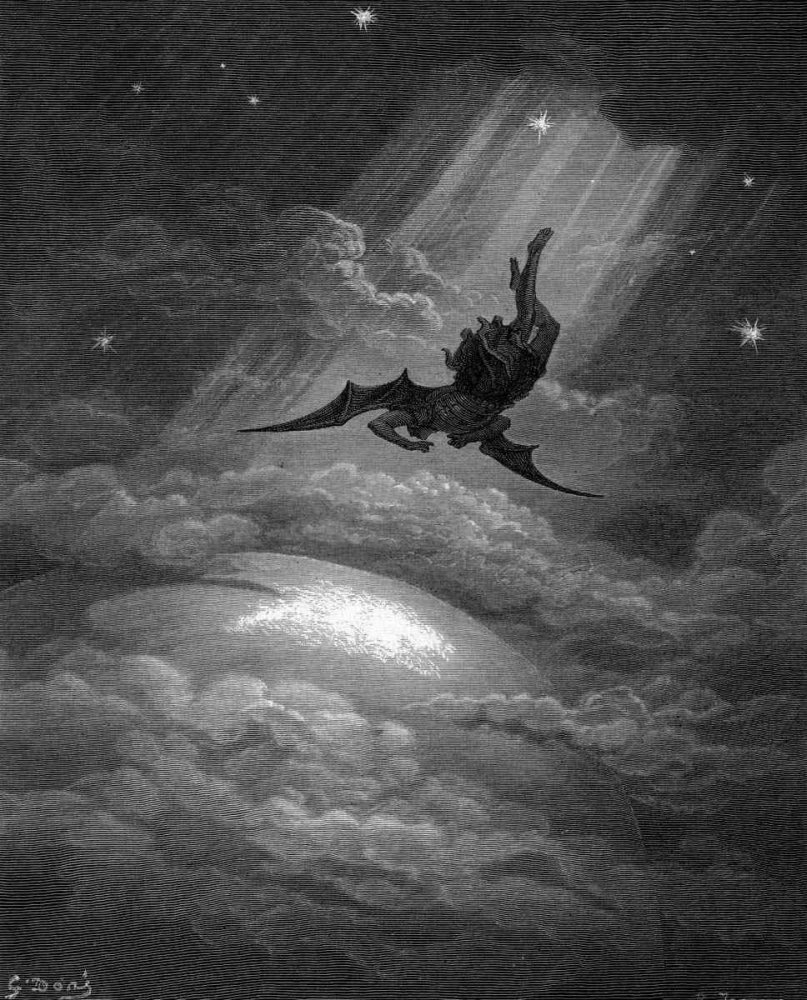
“Verily I say unto you, that one of you shall betray me...”
“…Then Judas, which betrayed him, answered and said, Master, is it I? He said unto him, Thou hast said.“
I have always found the character of Judas quite fascinating. One guilty of innocent blood, but also quintessential in possibly the greatest story of man. One may only wonder whether this deed was one of honor and glory, or of shame and treachery. Perhaps the answer to that lie on the thinker. I can only imagine a Gnostic telling you that it was honorable, a Christian telling you it was horrible, or a Nihilist telling you it doesn’t really matter.
Going beyond this, I believe that there are equally interesting implications within this complex narrative. The one I’m particularly fascinated with here is the idea that this betrayal was supposedly prophesied, with Christ himself referring to such.
“I speak not of you all: I know whom I have chosen: but that the scripture may be fulfilled, He that eateth bread with me hath lifted up his heel against me.”
John 13:18 KJV
“Yea, mine own familiar friend… which did eat of my bread, hath lifted up his heel against me.”
Psalm 41:9 KJV
Well, why does that matter? I believe it does as depending on your frame of understanding when it comes to prophesies and how they work (or at least, how you think they work), there are interesting things to be taken out of this. I think the easiest way to put this would be through a question: “Was Judas’ destined to betray Christ in order to fulfill the prophesies, as orchestrated by the Lord?” If so, Judas did not technically have a choice on what he could have done when the events unveiled. Even if he desired against it, he could not have chosen the loyal path, since his fate was sealed. This would then beg the question, how is that fair? There was no choice there, only predetermined futures.
To this you may say, “No, his betrayal is not something The Lord forced him to do, but something he chose to do so. The Lord could have used anybody else to fulfill His plan, but it just happened to be Judas.” And to that I say, “Fair enough.” I believe it really depends on how you would like to define The Lord’s plan and how prophesies work, as I previously mentioned. But no matter how you put it, there will always be uneasiness in seeing that often times, what is supposedly “God’s plan” may not always be fully encompassed with good. The story of Job is probably an even better example of this specific idea, where all of Job’s suffering was essentially part of The Lord’s plan in His gamble with the Accuser (or The Devil, in several translations). I think one path the majority of believers must cross is this acceptance that we really do not know what can be truly attributed to The Lord. It may be easy to credit all good to a perfectly good god, but many examples within the Biblical corpus show that its not that clear or just black and white.
One example I like to use for this idea is as such. Let us suppose that you have two individuals, Alice and Bob. Both have always been Christians, but at a certain point in their life, something happened. Alice gets a promotion, and Bob found out he was laid off. Given such circumstances, Alice grows to become quite fond of material pleasures, and eventually loses sight of her faith. Bob on the other hand, finds comfort in the passion story, and chooses to continue to “bear his cross” as he faces the newfound struggles of an uncertain world. Would you have attributed the fortunes that Alice received as blessings from the divine? Would you have attributed the misfortunes of Bob as curses from the devil?
One objection I have received to such an example is that one may be blessed by The Lord, but it is what they do with it that shows their true devotion and god’s true plan. I find that quite unconvincing as if you were to suppose an all-powerful, all-good, and all-knowing god, the fact that he simply “overlooked” the future of someone losing faith seems implausible. It also raises question of whether “blessings” are detrimental to one’s faith. Perhaps, one may remain in faith with it, or not. Then again, if such is the case that blessings heavily influence one’s future, can it truly be said that free will exists if the Lord provides and takes in such ways?
Leave a Reply